About Us

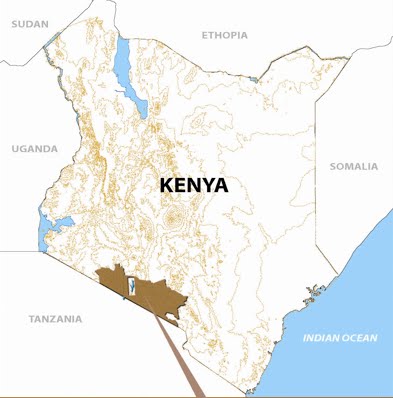
The South Rift Valley region of Kenya where SORALO works spans an area of approximately 850,000 hectares (2,100,396 acres) covering a range of topographic and ecological conditions and hosts one of the richest large mammal assemblages on earth. The productivity and survival of wildlife and livestock in this area depend on a common ecological strategy rooted in mobility and feeding efficiency. This has made it possible for wildlife and pastoral livestock to co-exist for over 3,000 years without significant degradation of the environment. This area comprises of mainly arid and semi-arid lands, and unfortunately has a history of long-term marginalization and neglect, particularly by governmental policies and departments. However due to its rich culture, wildlife, ecology and landscape the potential for diversification of land use and livelihood generation, particularly through tourism, is high.

Area Map

Area Map

Friday, April 12, 2013

CULTURE, COEXISTENCE, COLLABORATION: A MAASAI STORY


A presentation for the Barrows lecture series 2013

A big congratulations is in order for John Kamanga, Coordinator of SORALO and Chairman of Olkiramatian Group Ranch, for winning the 2013 Cincinnati Zoo and Botanical Garden's Wildlife Conservation Award. The award was given to John in order to honor his conservation leadership. Established in 1993, this award has been presented to leading scientists and conservationists, including Jane Goodall, George Schaller, E.O. Wilson, and David Western. 
Alongside receiving the award, John also gave a presentation as part of the Zoo's Barrow's lecture series

For centuries the nomadic Maasai pastoralists have lived in relative harmony alongside wildlife. Traditional seasonal movements meant that wildlife were free to roam with the livestock in search of water and pasture. Fences and permanency were not part of the culture. The South Rift valley of Kenya is one of the few areas left where these strong traditional values still prevail. The main bulk of the area remains communally owned and governed, with mobility still being key to the success of both the wildlife and livestock in the area, ensuring sustainability of livelihoods of the conservative pastoral community. Despite being outside of any protected area, wildlife is abundant, and the area hosts a particularly high diversity of carnivores.


Many conservation efforts start with trying to win space for wildlife. Whether they were government initiatives, driven by NGOs or by communities themselves, the basic premise for conservation was to conserve wildlife, either because it was seen to be a moral obligation, for recreational purposes or for financial benefit to those involved. But what perhaps has been missing is the best way to do so, stemming from a lack of understanding of the deep-rooted cultural practices and traditions which have enabled wildlife to coexist with pastoral people across so much of East Africa for so long.


Born and raised herding his father’s cows deep in the Southern most part of Kenya’s Great Rift Valley, John  Kamanga learned first-hand about his tribe’s unique ability to live alongside wild animals, including the largest of Africa’s predators, lions. As a young adult, he became elected leader of his Maasai community, and started to tap into the wildlife as a resource for his people by setting aside conservation areas, and bringing in tourism. Under his watch, the South Rift has become an impressive example of collaboration and integration between researchers, institutions, communities and disciplines.


This is his story: a story of his culture, its role in the coexistence of wildlife and livestock, and of the impressive collaborations which enable successful conservation to prevail. 

Thank you John for your commitment to your community and to conservation. 


Posted By:
Rahab Wandia

Thursday, October 4, 2012

MAASAI CULTURAL HERITAGE AND ANNUAL FESTIVAL LAUNCH


The Maasai Cultural Heritage Program is formally launched!


The Maasai Cultural Heritage program has formally begun! Judging from the look on the faces of the many hundreds of local community members who graced the launching ceremony at the Olorgesailie prehistoric site, it is an appropriate and worthwhile project. They welcomed the idea enthusiastically and pledged their support to ACC, SORALO and their partners to bring the objectives of the program to fruition.

The day was bright and hot but this did not deter everyone who gathered to witness the birth of this unique program.  In keeping with Maasai tradition the site for the proposed Maasai cultural museum, the physical base for the program, was blessed by elders as the local women sang and unloaded their donkeys as they would before setting up a new home.  


Speeches of support followed from the local community leaders, the Chairman of the African Conservation Centre (ACC) Dr. David Western, the Executive Director of ACC Mrs. Lucy Waruingi, Dr. Rick Potts from the Smithsonian Institution an institution of the National Museums of United States of America, the Director of Sites & Monuments of the National Museums of Kenya Dr. Hassan Wario and the guest of honor the Permanent Secretary of the Ministry of State for National Heritage and Culture , Dr. Jacob Ole Miaron. 


Additional institutions which attended were Eco-tourism Kenya and MPIDO. 
Everyone was in agreement there is need for the “Maasai” brand to be observed and conserved in a form that is true to traditional values and in a way that can be learned and appreciated by the generations of Maasai to come.

The program aims to rekindle, preserve and perpetuate Maasai heritage by launching the first Maasai Festival in 2013. The annual festivals will bring together vignettes of Maasai heritage and encourage communities to share, restore and celebrate their culture, and to exhibit and perpetuate traditional practices, skills and knowledge for the benefit of Maasai communities. In addition, the interactive cultural museum which will be created at Olorgesailie will showcase Maasai culture all year round. 


Posted by;
Rahab Wandia

Tuesday, October 25, 2011

Honoring Learning at Lale’enok

October 10th, 2011

Lale’enok Resource Center Impressions

By Anna Sakellariadis


Her black graduation robes, accented with a pile of traditional beaded necklaces, blended in among the colorful throng of Maasai women that came to greet Agnes Kamanga as she stepped from her car to the grounds of the Lale’enok Resource Center. The previous day, Agnes had graduated from the Catholic University of Eastern Africa. On this day, she returned to her home in Olkiramatian Group Ranch to celebrate with four hundred members of the community.


Many came early to the resource center to help with the preparations. The women gathered in one corner, cooking chapatis, rice, and stew. Meanwhile, the men roasted a cow a little ways off from the buildings, out of the sight of women so that young warriors would be able to eat it. A church choir set up their instruments and began playing their music, which swelled throughout the whole site. Upon Agnes’s arrival around mid-day, the official celebration began.

Everyone gathered under the shade of the main building for songs, speeches, and even some cake, courtesy of Mama Jo. The gathering, which had been organized by Agnes’s husband, John, the group ranch chairman and head of the South Rift Association of Landowners, was an opportunity for the community to share in her achievement. Singers from Kajiado came specially to sing about the importance of education and environment. When it was Agnes’s turn to speak, she too stressed the importance of education for everyone.


The utterance of such messages under the thatched roof of the main building at Lale’enok reverberated against the efforts of the women’s group that manages the site. The group’s bursary fund, supported by the resource center’s revenues, is already sending some of the community’s neediest children to school.

And so, even when the official celebration had finished, and even after the subsequent feasting and socializing was over, still the lingering impressions of the day remain: a local woman has proudly earned a higher education degree, and schoolchildren in Olkiramatian are gaining in opportunities through the work of the center and the women that run it.


Posted By
Rahab Wandia

Monday, March 7, 2011

OFFICIAL LAUNCH OF LALE`ENOK RESOURCE CENTRE


On 4th march 2011 all vehicles from African conservation centre and SORALO drove towards Lale’enok resource centre in the south rift Magadi where we were officially launching the centre. It was an event that brought together more than 200 people both VIPs and the local community members. Lale`enok refers to the role Maasai scouts play in collecting information that affects the decisions for well-being of their livestock and families. It symbolizes the use of sound science in collaboration with local communities to achieve conservation goals.


The occasion was graced by Mr. Jaco Mebius, the Senior Policy Adviser for Environment, Water and Sanitation to the Royal Netherlands Embassy, who officially opened the centre, Representatives from the Ministry of Environment and Mineral Resources Mr. Agatsiva, the Ministry of State for National Heritage and Culture Mr. Simon Wachie, the director sites and monuments National Museums of Kenya Mr. Wario, country director Earth watch Mr. Nick Oguge, the director WCK Margret Otieno, Director KTB Mr. Ndegwa, KWS Mr. Korir, AWF Mr. Daudi Sumba, Eco-tourism Kenya Mr. Onesmus kahindi and the newly formed Taskforce for drafting the Legislation Implementing Land Use, Environment and Natural Resource Provisions of the Kenya Constitution were all present and the feedback was extremely positive from all fronts. SORALO Board members from all the 15 group ranches and community members also graced the occasion making it more colorful and joyous.


LONG LIVE LALE`ENOK, LONG LIVE OUR ENVIROMENT.


Posted by Rahab Wandia

Thursday, February 3, 2011

A Historic meeting at Kwenia - Olorgesailie

An historic meeting at Kwenia- Olorgesailie that aims to conserve this unique ecosystem and benefit Maasai communities - BY MUNIR VIRANI


Every journey begins with a small step. Over the last nine years my colleague Simon Thomsett and I have been monitoring populations of Ruppells vultures at the Kwenia cliffs in Kajiado district, about a three and half hour drive south of Nairobi. This colony is the largest breeding colony of species in southern Kenya and should be considered a national asset. Unfortunately, Kwenia has no conservation status whatsoever. The surrounding areas of Olorgesailie, Kilonito and oldonyo Nyokie also have no conservation status. These regions are harsh, arid and water deficient. In contrast and by virtue of being in the southern rift valley the region also contains some of the most diverse species of vertebrates on earth. Notwithstanding the importance of this very important vulture colony, other species such as lesser kudu, gerenuk, wild dogs, cheetah, hyena and myriad of raptor and other prolific birds abound. Olorgesailie is also an important prehistoric site, recognized globally as one of the places where early hominids used hand axes. Hominids fossils go back nearly nine hundred thousand years based on work conducted by Dr Rick Potts and his colleagues from the Smithsonian institution. The species of animals unearthed at Olorgesailie and other locations in southern Kenya changed over time as environmental conditions shifted time and again. Species of baboons, elephant, zebra, pigs and hippopotamuses that had been very abundant in the region went extinct. They were replaced by closely related species that still survive in east Africa today.

On 26th January, 2011, I had the pleasure of attending an historic meeting held at the Olorgesailie prehistoric site near Ol-Tepesi followed by a site visit at the base of the Kwenia vulture breeding cliffs. The meeting was organized by john Kamanga of SORALO (south rift association of land owners) and facilitated by Dr David Western and his colleagues of the African conservation centre and attended by local Maasai elders, chairmen of local wildlife and conservation groups and local land owners. Also present was Titus Kaai, a young educated Maasai gentleman with back ground in chemistry and an ambassador of the vultures of Kwenia. I have known Titus since he was a young boy and today meeting was huge step towards achieving his dream of getting the area conserved. Titus and his family live at the base of the cliffs and for the last five years, they have watched helplessly as truck loads of vehicles blaze towards the seasonal lake at the base of the vulture cliffs and ferry piles of cut trees, logs and deadwood to sell to a rapidly growing human population in Nairobi’s suburb. “The land is fast getting degraded” he told me sometimes last year when Kenya experienced one of its worst droughts and his family lost a lot of livestock. “Soon even the vultures will go” he said despondently. “Don’t give up Titus,” I would tell him. And today’s meeting gave him that opportunity to express his feelings.

The mood at the meeting was cordial and everybody I spoke to expressed delight and jubilation at the fact that there were steps being taken to develop a conservation easement area that will pave the way for future conservation efforts and community based eco-tourism prospects a step that will certainly benefit the local community. Titus especially was all smiles.


It was a hot day and for me the highlight was meeting with Dr Rick Potts of the Smithsonian institution and listening to his impassionate talk about the fossil record and evolution of the area. Dr Rick Potts and his colleagues have been conducting research in this area for the last 26 years. The road to the site was dusty and we left in a colony of three vehicles. As we drove across the dry lakebed, I felt a sense of relief that there was now a consortium of individuals and organizations that really believed in this cause. The Kwenia area is truly one of the most scenic landscapes in Africa. We approached our campsite and everyone looked at the impressive over-empowering cliffs. I pointed out to the Ruppells vultures circling above us, an Egyptian vulture also flew above us while a pair of lanner falcons gave us an exceptional show in speed, agility and grace. My friend Gordon brown from Zimbabwe accompanied me to Kwenia and was given the task of taking photos. He was also in complete awe of the area.


John Kamanga led the meeting and explained to the Maasai elders what the next steps would be. There will be numerous challenges since some of the area is trust land whilst other parts are privately owned. We all agreed that we would first need to expose the local Maasai elders to areas where successful conservancies and eco-tourism ventures were ongoing. This would include places such as Shompole and Olkiramatian. Understanding the benefits accrued from conservation practices via ecotourism would help motivate the Maasai elders to engage in similar practices back at Kwenia and Olorgesailie. Secondly, it was critical that we help develop local capacity especially game scouts and rangers who would then be based at each of the entrances to Kwenia and other ranches to curb the horrendous felling and destruction of the trees. And finally, we agreed that we should hold another stakeholders meeting where all the Maasai land owners living in the proposed conservation easement area give a firm commitment towards achieving conservation of the area. This would be the most challenging task. My role via the peregrine fund would be to help develop local capacity and continue to provide the scientific knowledge, with respect to the avifauna (particularly raptors) that would help towards the development of a conservation and management plan, critical in ensuring that Kwenia and the greater Olorgesailie region be conserved and safeguarded for future generations. While we may have made history in this first meeting, the challenges are enormous and the path long, but with the backing of credible organizations that are determined to see Kwenia conserved, we shall certainly overcome.


Posted By Rahab Wandia

Tuesday, December 21, 2010

PLACES TO VISIT THIS DECEMBER IN THE SOUTH RIFT

In slightly over two hours drive you will find yourself in a serene wilderness enjoying wildlife and bird viewing. You will also have an opportunity to walk with baboons, Come enjoy the various activities from wildlife and bird viewing on Lake Magadi and Lake Natron, to walking with baboons, tracking night predators with our researchers or exploring the hidden ancient caldera caves of Mt. Suswa which houses unique bat species only found in this area. Drive through Lake Magadi past the scenic Shompole hill to Lake Natron, the breeding spot of the famous flamingos. The list of activities is endless but the experience is memorable. Whilst you appreciate the beauty and diversity of this region as a visitor, you will be benefiting the local community and encouraging conservation of the wildlife and forests.
Tented Sampu camp is self catering perfect adventure destination, available are 10 spacious ensuite tents with queen size double and single beds positioned for you to enjoy the panoramic views overlooking the surrounding acacia woodlands and distant peaks of Shompole hill. While at Sampu camp you get to enjoy guided nature walks, day & night game drives, bird watching, hiking and swimming, bush breakfast and scenic safaris.


Loisiijo lodge is perfect for a weekend getaway for situated between Amboseli and Maasai Mara national parks. It is hidden beneath ancient tamarind trees on the fig shaded banks of the Ewaso Ngiro in Shompole group ranch. Four airy cottages can accommodate ten guests at any time ensuring personal attention and privacy. A spacious dining area and fully equipped kitchen are available for your use. While at Loisiijo lodge you can accompany researchers to their field trip, enjoy game drives in the Shompole conservation area, bird watching, nature walks with local Maasai and cultural tourism.


Visit the Laleenok resource centre and spend time with the researchers as they explore the strong links between traditional knowledge, science and conservation – an interface between scientists and the community.


Walk with a troop of habituated baboons - While down at the south rift get to walk with a troop of habituated baboons together with researchers and guests and get to know the familiar aspects of the behavior of baboons that is similar to humans.


Shompole group ranch has fantastic scenery and a well managed conservancy which is home to several species f wildlife. While visiting Shompole you can spend a night at Oloika guest house and support a Maasai women’s self – empowerment initiative.


To book either of these places, send an email to; admin-soralo@acc.or.ke. Or call 0728-249301
You can also visit our office at the African conservation centre in Karen opposite hill crest preparatory school, fair acres road.

Friday, November 5, 2010

November High lights

The Quivira coalitions 9th annual conference
November 10-12, Albuquerque, NM

“The carbon ranch: using food and stewardship to build soil and fight climate change”


Climate change is the most pressing issue confronting humanity. It is also a tremendous opportunity. Right now the only possibility of large scale removal of green house gases from the atmosphere is through plant photosynthesis and other land based carbon sequestration activities. Strategies include: enriching soil carbon, farming with perennials, employing climate-friendly livestock practices, conserving natural habitat, restoring degraded watersheds and rangelands, and producing local food. Over the past decade, many of these strategies have been demonstrated to be both practical and profitable. A carbon ranch bundles them into an economic whole with the aim of creating climate-friendly landscapes that are both healthy ecologically and the source of healthy food. In this conference we will explore this exciting new frontier and learn from carbon pioneers from around the world.

The carbon ranch model combines ecological and economic goals:

1. Progressive cattle management, over the past twenty years, a suite of innovative management methods have been developed worldwide that employ livestock as conservation agents, including noxious weed eradication, “herd effect” planned grazing strategies and low-stress livestock handling (collectively we call it” the new ranch”). Increased grass cover which leads to increased carbon sequestration.
2. Local Grassfed beef, animals raised on grass, processed nearby and consumed in a local community, have a small carbon footprint compared to commodity livestock production (there is some debate in the literature about the trade-off of “food miles” and increased methane production that results when cows eat grass). Grassfed beef is also viewed as healthier than feedlot beef (corn-based) by many researchers and members of the public.
3. Conservation practices that improve ecosystem function: much of the arid west exists in a degraded ecological condition. In recent years, a suite of restoration methodologies have been developed that improve ecosystem function, including; the riparian restoration strategies pioneered by bill zeedyk, water harvesting from improved rural roads and upland erosion mitigation. These (non-cattle) conservation practices improve land health and thus contribute to carbon sequestration.

The 9th annual conference aims to discuss and formulates ways in which “the carbon ranch” reduces its carbon footprint, enriches its soil, maintains a healthy carbon cycle, conserves natural habitat, restores degraded watersheds and provides climate-friendly co-benefits including Grassfed meat.

SORALO will be represented by john Kamanga in the conference and will make a presentation on “Carbon and Conservation for Pastoral Communities” For more information please see the abstract below.

Carbon and Conservation for Pastoral Communities


Abstract


John Kamanga, Lucy Waruingi, Deepali Gohil, Jeffrey Worden

The picturesque Savanna grasslands, commonly referred to as rangelands cover 65% of Kenya’s land surface, account for 60% of the country’s livestock production and 80% of its tourism revenues. It is also where widespread poverty occurs and is the most neglected region in national development schemes, thereby leading to the severe degradation of rangelands due to deforestation, unsustainable livestock management and poor agricultural practices, loss of productivity and resilience of the ecosystem and an increased vulnerability to drought and climate change.

The Southern Rift Valley region of Kenya, lying between Amboseli National Park to the East and Maasai Mara National Reserve to the West, ranks highly amongst Africa’s biodiversity hotspots. Stretching from the arid flats of Lake Natron to the forests of the Nguruman escarpment, it supports one of Africa’s richest concentrations of mammals and birds and is home to Maasai pastoralists whose traditional practices sustain a productive livestock economy and by extension biodiversity.

The South Rift Land Owners Association (SORALO) in collaboration with the African Conservation Centre (ACC) and other partners brings together communities to collectively manage their lands, and help restore the ecosystem services of the open rangelands in a sustainable manner through the use of natural resources and biodiversity conservation. The goal of ACC’s Carbon, Climate and Community program is to adapt to and mitigate against the effects of climate change by securing a sustainable future for pastoral communities and biodiversity in the rangelands of East Africa through the establishment of grass banks and conservation areas, grazing management schemes, improving cattle breeds, alternative livelihood development and payments for ecosystem services in particular for carbon storage and watershed management. Payments for Ecosystem Services, in particular carbon credits from REDD+ projects, plays a key role for the continuity and preservation of this pristinely conserved area that holds a vast amount of carbon stock and biodiversity. The resultant effect is the conservation of large landscapes, rich in biodiversity, holding vast stocks of carbon and the preservation of indigenous people and their practices.


OTHER EVENTS
The dutch officials will also be visiting the south rift this month pass by the almost ready resource centre.


The cattleman project is doing well and during the last month we have been blessed with more calves, 21 Cows were incalf and so far we have five calves one female and four male calves.

Monday, October 18, 2010

Roseanne Hansen South Rift Visit


Roseanne and her husband Jonathan made a visit to the Olkiramatian and Shompole conservancies to meet the community scouts and donated some field equipment for the scouts work. She was accompanied to the scout’s base by the Soralo coordinator Mr. John Kamanga who later handed her over to the conservation manager a Mr.Lenaimado.
Mr.Lenaimado then conducted a Guard of Honor mounted by the scouts from the 2 conservancies in respect of the visiting donors. Roseanne was requested to inspect the Guard of Honor. After the inspection, the scouts were allowed to sit under a shade and introduced to Roseanne and Jonathan.


The two donors also introduced themselves to the scouts and informed them of their interest to support the South Rift scouts programme. The conservation manager briefed the two donors how the scouts system started and what their work is and how the scouts operate. He went on ahead informing the donors that the main work of the community scouts are,
• To carry out Anti poaching patrols in the conservancies
• Monitor wildlife on daily bases especially the endangered species e.g. elephants, lion, cheetah, leopard to mention few.
• Environmental protection
• Mitigate human wildlife conflict cases and create awareness in the general South Rift.
He also went ahead to brief the donors on the challenges facing the scouts while implementing this programme citing examples such as,
• Lack of field equipment like patrol car, radio equipment, uniforms, rations, GPS, cameras to document field reports etc
• Capacity-Training, out of all the 36 Soralo scouts, only 16 have attended formal training at KWS Manyani Training for 3 months. The remaining lot also needs to undergo the same to enable them handle the challenges of conservation in their area of jurisdiction and country at large.
• Human wildlife conflicts-Mitigation measures are required and therefore have to work hand in hand with the stakeholders.
• Funding for salaries, the list is endless.
Conserventures.org a U.S. based organization through Roseanne and johathan donated the following equipments,

• 4 Bushnell 10x42 Binoculars
• 6 Garmin Etrex GPS and Batteries
• 5 Camping tents.

Roseanne husband Johathan demonstrated to the scouts how to pitch the tents, the use of the binoculars, the GPS application in the field and general maintenance of the equipment.